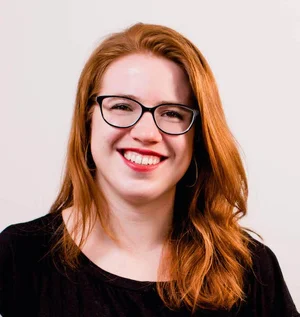
Q&A with Judith Burger
Inspiration and Background
Q: What first inspired you to become an artist?
A: In 2017, I had the privilege to participate in the Has Heart – 50 State Project https://hasheart.us/projects/hero-series/ as a veteran https://hasheart.us/bebold/#project-overview . It was amazing to meet and work withTyler Way, Kendra Clapp and Rich Tu. At one point I remember saying to Rich “If I wasn’t doing this, I think I would like to be an artist like you.” It is a seed that just kept growing in me after that experience.
Q: How does your environment or background influence your work?
A: I grew up in a small logging town in southern central Oregon. Everything we did, my parents’ livelihood, and most hobbies and entertainment, happened outside in nature. I think that is why so much of my work focuses on human influence on nature or on nature itself.
Q: Who are your biggest artistic influences or mentors?
A: My mom is probably my biggest influence. She always encouraged mine and my sister’s creative exploration and expression, even if she rarely allowed it for herself.
Q: What is the story behind your first or most memorable artwork?
A: I don’t have one
Creative Process and Techniques
Q: Can you describe your artistic process from idea to finished piece?
A: Mostly I am guided by my gut and intuition or whim or mood.
Q: What is your preferred medium and why?
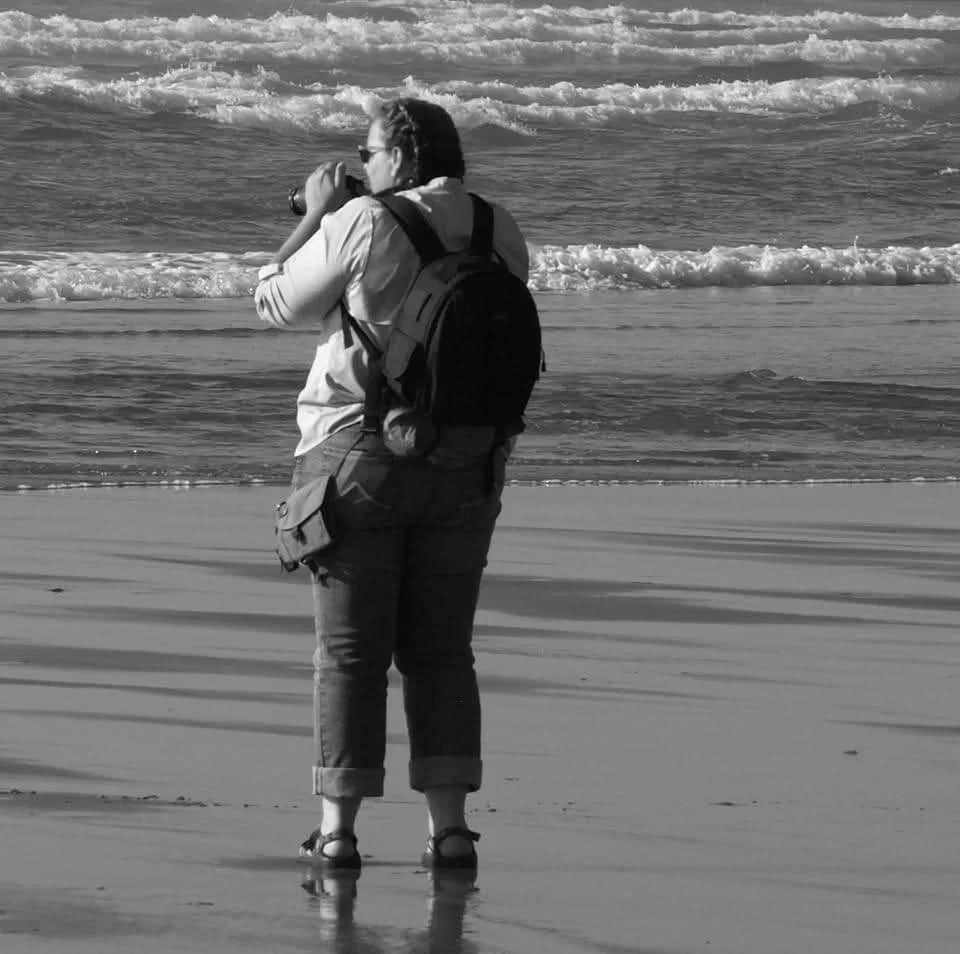
A: I have two preferred mediums: Photography and Fiber Art. The processes for me are so different. Photography allows me to move, and search. To look deep at what is already there and then capture and share the feeling what I see is creating in me. It is an individual experience. Fiber art is community. It is warmth and texture and shared experience. It is function and yet can be purely aesthetic.
Q: How do you handle creative blocks or, conversely, how do you know when a piece is finished?
A: One of my favorite quotes is by author Jack London “You can’t wait for inspiration. You have to go after it with a club.” If I am blocked, I usually try a very different creative project and when I am finished with that, I am usually unblocked.
Professional Practice and career
Q: How do you structure your day and manage deadlines?
A: I have a big whiteboard in my studio space that I update weekly. On it are the categories: Possibilities, Classes (divided into teaching and taking), Notes, To Do, Deadline Soon, Waiting to Hear Back, and Current.
Q: What is the biggest challenge to face as a professional artist?
A: Not measuring my success, or failure against how I perceive other artists successes.
Q: How do you define success in your work?
A: When I can share it and others genuinely want to see it.
Q: What are your future goals or upcoming projects?
A: I want to continue to grow and learn.
Deep Dive Questions
Q: What does your work aim to communicate to the audience?
A: Feeling! I don’t like others telling me how to feel or how I should feel and I don’t want to do that with others. I just want people to look at and with some of my fiber art touch and have feelings about it. Whatever it brings up for them.
Q: How do you choose your subject matter?
A: It isn’t something I usually choose, more often it shows itself to me.
Q: What is your philosophy on the role of art in society?
A: Society is Art! Community is to society what medium is to art. We are all most comfortable in our primary mediums, but gain so much value by exploring other mediums and discovering the value, beauty and complexity of them.